

Beyond Social Media: 7 Digital Marketing Channels Your Business Can Use to Grow
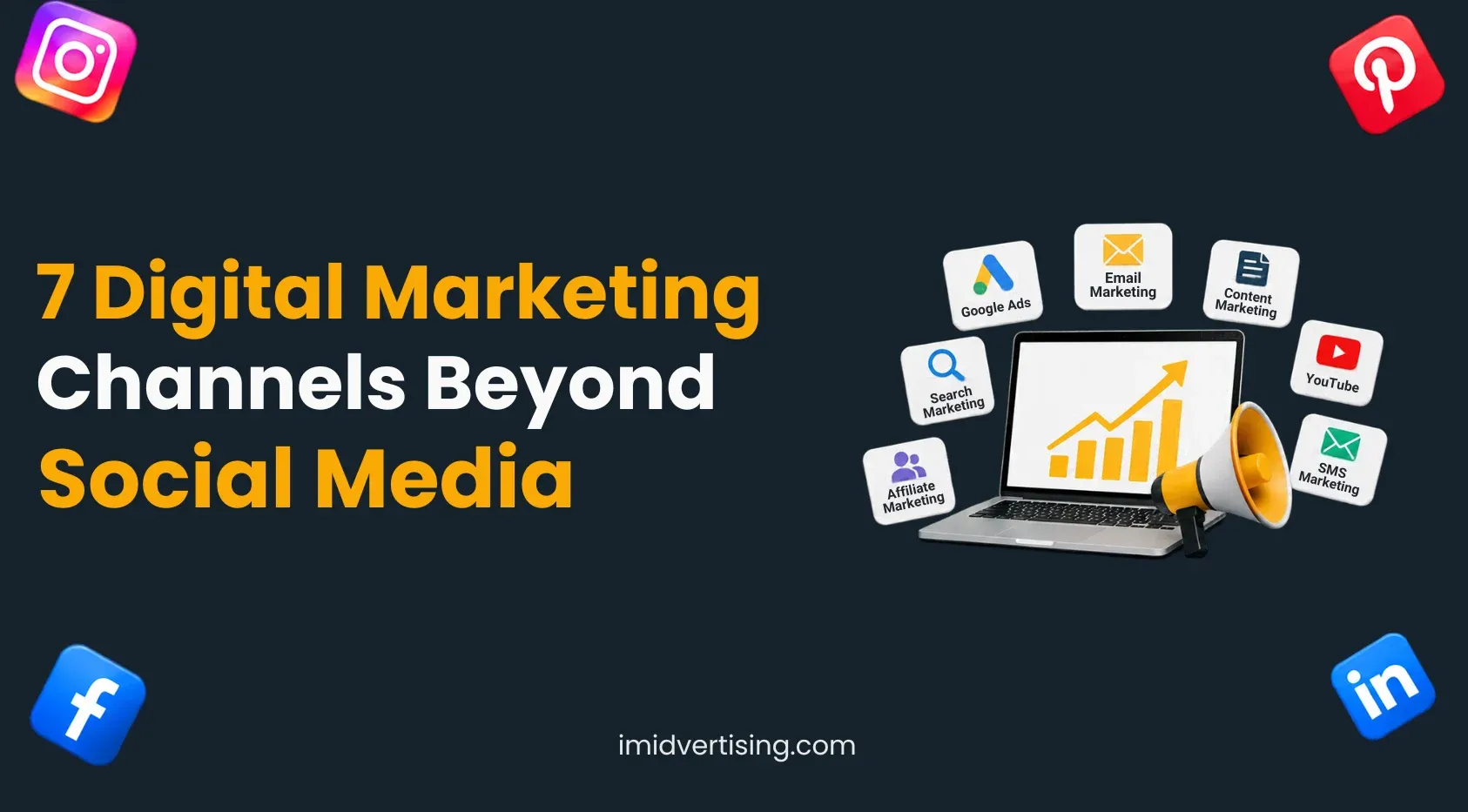
Social media marketing helps businesses build awareness, but it is only one part of digital growth. SEO, paid advertising, email marketing, and a well-optimised website can help you attract people who are actively searching for your services and turn their interest into enquiries.
For businesses in Ahmedabad and across India, the real opportunity lies in combining the right marketing channels instead of depending on social media alone.
Why Businesses Need Marketing Channels Beyond Social Media
Posting regularly on Instagram, Facebook, or LinkedIn does not guarantee enquiries. Your audience may see your content without needing your services at that moment, while potential customers searching Google may already be looking for a solution.
A stronger digital marketing strategy connects different channels to the customer journey. Someone might discover your business through Google Search, read your blog, compare your services, and contact you through your website. Each channel plays a different role in building trust and generating leads.
7 Digital Marketing Channels to Grow Your Business
1. Search Engine Optimisation (SEO)
- What it is: Optimizing your website and content to rank higher in unpaid search engine results on Google.
- Why use it: Captures active, intent-driven search traffic and builds long-term organic visibility.
- What to do: Optimise service pages, publish useful content, fix technical SEO issues, and improve internal linking.
- Best for: Businesses seeking sustainable search visibility and relevant website traffic.
How to measure results: Monitor organic clicks, impressions, search queries, and enquiries through Google Search Console and Google Analytics. Focus on whether SEO attracts relevant visitors and contributes to business goals, not just whether rankings improve.
2. Email Marketing
- What it is: Sending newsletters, promotional offers, useful updates, and automated follow-up emails to people who have subscribed.
- Why use it: Maintains customer relationships, encourages repeat purchases, and keeps your business connected with interested prospects.
- What to do: Build an email list through genuine sign-ups, group subscribers by their interests, and send relevant messages with a clear call to action.
- Best for: Customer retention, repeat sales, and lead nurturing.
How to measure results: Track email clicks, enquiries, purchases, unsubscribes, and campaign revenue. Review which messages generate meaningful actions and improve future campaigns accordingly.
3. Content Marketing
- What it is: Creating and distributing valuable content, including blogs, guides, case studies, videos, and other educational resources.
- Why use it: Answers customer questions, builds brand authority, and supports organic discovery through SEO.
- What to do: Identify common customer questions and create content that provides clear answers, useful information, and relevant next steps.
- Best for: Businesses that need to educate potential customers and build trust before a purchase.
How to measure results: Track organic traffic, engagement, visits to relevant service pages, and enquiries generated or assisted by your content. Prioritise content that helps readers make decisions rather than publishing articles simply to increase volume.
4. Pay-Per-Click Advertising (PPC)
- What it is: Running paid online advertising campaigns to reach targeted audiences. In pay-per-click campaigns, advertisers pay when someone clicks an ad.
- Why use it: Helps businesses reach potential customers without waiting for organic search rankings to improve.
- What to do: Choose relevant keywords, define your target locations, create clear ads, and direct visitors to landing pages that match their search intent.
- Best for: Businesses seeking targeted leads, bookings, sales, or faster campaign testing.
How to measure results: Monitor qualified leads, cost per lead, conversion rates, and sales. Set up conversion tracking to understand which campaigns contribute to actual business outcomes.
Important: Do not increase your advertising budget simply because clicks are increasing. Check lead quality and acquisition costs before investing more.
5. Local SEO and Google Business Profile
- What it is: Optimizing your local online presence to help customers find your business through Google Search and Google Maps.
- Why use it: Improves your chances of reaching nearby customers looking for relevant products or services.
- What to do: Complete your Google Business Profile, maintain accurate business details, add genuine photos, select relevant categories, and respond to customer reviews.
- Best for: Local service providers, clinics, restaurants, retailers, and businesses serving specific locations.
How to measure results: Monitor profile interactions, website visits, calls, direction requests, and enquiries. Review these metrics alongside actual leads to understand whether your local visibility is contributing to business growth.
Important: Google considers relevance, distance, and prominence when determining local rankings. A complete profile supports visibility but does not guarantee a top position.
6. Website Conversion Optimisation
- What it is: Improving your website to increase the percentage of visitors who complete an action, such as submitting an enquiry, booking a consultation, or making a purchase.
- Why use it: Helps convert existing website traffic into more enquiries and sales without relying entirely on attracting additional visitors.
- What to do: Explain services clearly, display visible contact options, improve mobile usability, simplify forms, and provide genuine reviews or project information.
- Best for: Businesses that receive website traffic but generate fewer enquiries or sales than expected.
How to measure results: Track form submissions, calls, purchases, and conversion rates. Identify pages where visitors leave without taking action, then test improvements to understand what makes the website more effective.
7. Influencer and Partnership Marketing
- What it is: Collaborating with relevant content creators, complementary businesses, or industry partners to reach their audiences.
- Why use it: Introduces your business to potential customers beyond your existing audience and can generate referrals or qualified interest.
- What to do: Identify partners whose audiences match your target market, agree on campaign deliverables, and use tracked links or dedicated landing pages to measure results.
- Best for: Businesses looking to expand reach, build credibility, and generate referrals.
How to measure results: Track referral traffic, qualified enquiries, sales, and cost per acquisition. Evaluate partners based on audience relevance and business results rather than follower counts alone.
Which Digital Marketing Channels Should Your Business Use?
The right channels depend on your business goals, target audience, and budget. Start with the activities that address your biggest marketing challenge rather than investing in every channel at once.
| Business goal | Recommended channels |
|---|---|
| Improve organic search visibility | SEO and content marketing |
| Generate targeted leads. | PPC and conversion optimisation |
| Attract nearby customers | Local SEO and Google Business Profile |
| Increase repeat purchases. | Email marketing |
| Improve website enquiries | Website conversion optimisation |
| Reach new audiences | Influencer and partnership marketing |
Ready to Turn More Online Searches into Customers?
Based in Ahmedabad, IMI Advertising helps businesses connect SEO, Google Ads, social media marketing, website design, branding, and influencer marketing with their growth goals.
Whether you want more qualified enquiries, stronger search visibility, or better website conversions, our team can help you identify the right digital marketing activities for your business.
Ready to move beyond scattered marketing efforts? Explore our digital marketing services and discuss your growth goals with IMI Advertising.
Conclusion
Social media is valuable, but it should not be your only source of business growth. SEO, PPC, email, content, local search, website optimisation, and strategic partnerships offer different ways to attract and convert potential customers.
Start with the channels that match your goals, measure the results, and improve your strategy as you learn what works. A connected digital marketing approach can help your business build stronger visibility and generate more meaningful enquiries over time.
FAQs:
Yes. SEO, Google Ads, email marketing, and local search can attract customers without social media.
Google Ads can generate leads quickly when targeting, landing pages, and conversion tracking are set up effectively.
SEO captures search demand, while social media helps build awareness and engagement. The better option depends on your goals.
Local SEO, Google Business Profile, targeted Google Ads, and relevant service pages are useful starting points.
Track qualified leads, conversion rates, cost per lead, and sales to evaluate business results.
Get in touch with us for
Digital Marketing Services
09313100658
Available From 09:30 – 06:30
Email: support@imiadvertising.com