

The Complete SEO Services Checklist for Better Google Rankings
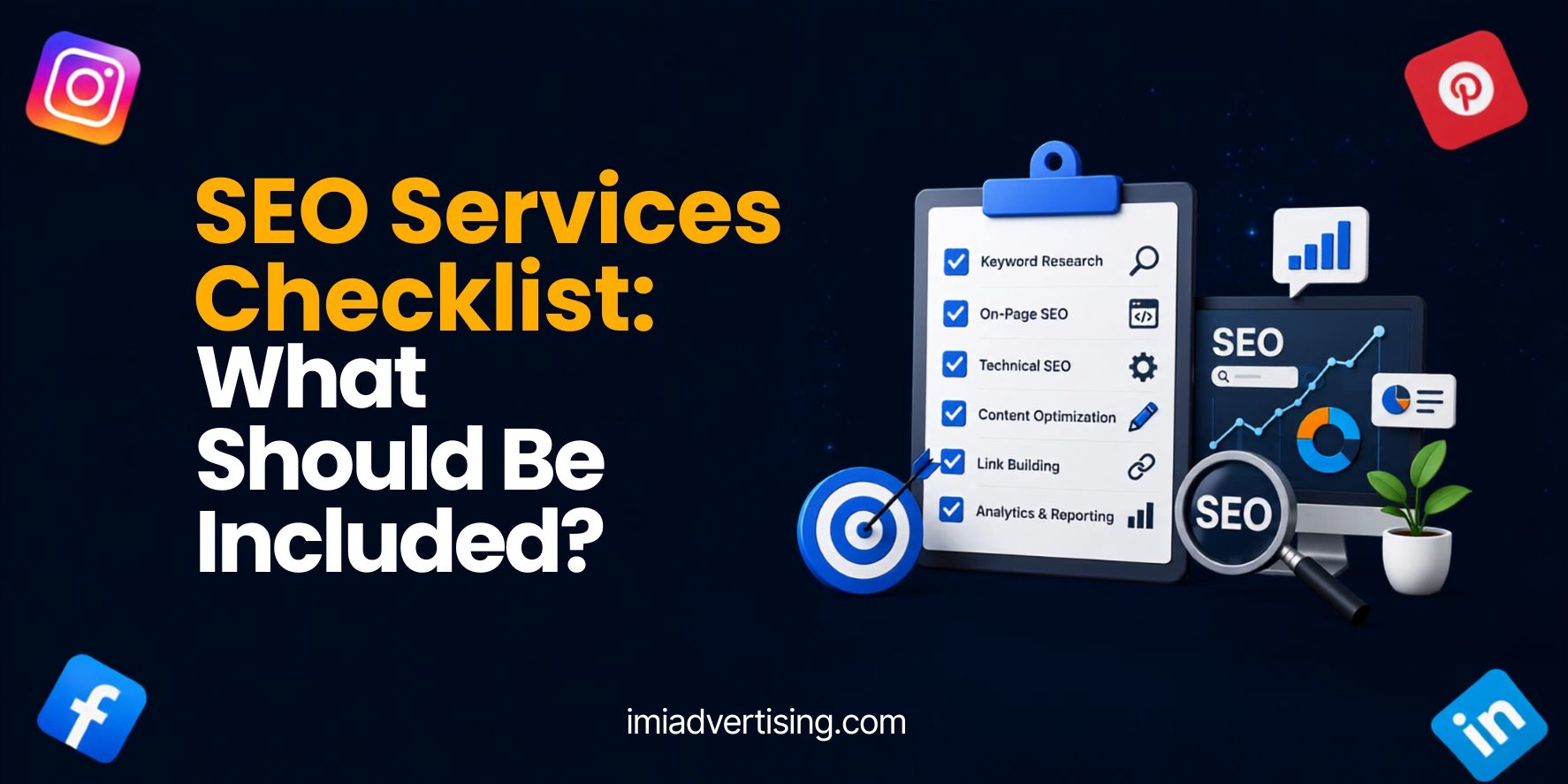
SEO services are more than adding keywords, publishing blogs, or building backlinks. A complete SEO strategy should improve your website’s technical health, search visibility, content quality, website structure, authority, user experience, and conversions.
If you are planning to invest in SEO, this checklist explains what a complete SEO service should include, from website audits and keyword research to technical SEO, content, local SEO, backlinks, AI search optimization, reporting, and ongoing improvements.
What to Check Before Buying SEO Services
Before choosing an SEO service, check its strategy, technical work, content, authority building, reporting, and ongoing optimization. Make sure you know what will be done each month, which pages will be improved, and how SEO results will be measured.
1. Website & SEO Audit
SEO should start with a complete website audit to identify technical issues, content gaps, indexing problems, weak pages, backlink issues, and growth opportunities.
A proper audit should review crawlability, indexing, broken links, redirects, XML sitemap, robots.txt, canonical tags, website structure, content quality, mobile usability, page speed, backlinks, and Core Web Vitals.
The audit should clearly explain what needs to be fixed first, what can be improved later, and which pages have the biggest opportunities. This gives the SEO strategy a clear starting point.
2. Keyword Research & Search Intent
Keyword research determines which search terms your website should target. However, search volume alone should not decide your keywords. A strong strategy considers search intent, relevance, competition, location, business value, and the type of page required to rank.
For example:
- Commercial: SEO Company in Ahmedabad
- Service: SEO Services in Ahmedabad
- Informational: What is Technical SEO?
- Local: SEO agency near me
- Long-tail: How to improve Google rankings
Each keyword should be mapped to the right page so that service pages target commercial searches while blogs and guides target informational searches.
3. On-Page SEO
On-page SEO improves the elements that users and search engines see on individual pages. It helps Google understand what the page is about, which search queries it is relevant to, and whether it properly answers the user’s intent.
A complete on-page SEO service should include:
- Title tag and meta description
- H1, H2 and H3 structure
- URL optimization
- Natural keyword placement
- Content optimization
- Image alt text
- Internal links
- Relevant FAQs
- Content readability
The goal is not to repeat a keyword throughout the page. The content should naturally cover the topic, answer important questions, and guide the visitor toward the next relevant action.
4. Technical SEO
Technical SEO ensures that search engines can properly crawl, understand, and index your website. Even strong content can struggle to perform if important pages cannot be discovered or indexed correctly.
Technical SEO should cover:
- XML sitemap
- Robots.txt
- Canonical URLs
- Redirects
- 404 errors
- HTTPS
- Duplicate content
- Indexing issues
- Structured data
- JavaScript-related issues
- Core Web Vitals
- Website architecture
Technical SEO is especially important during website redesigns, migrations, URL changes, and large-scale website updates. Regular monitoring is also needed as websites continue to change.
5. Content SEO
Content SEO focuses on creating and improving pages that match what users are searching for. It should not be measured simply by the number of blogs published each month.
SEO content can include service pages, blogs, location pages, FAQs, comparison pages, landing pages, topic clusters, and content updates. Each piece should have a clear purpose, match search intent, and provide useful information.
A good content strategy should also identify content gaps, outdated pages, thin content, and pages that receive traffic but do not generate meaningful results.
6. Internal Linking & Website Structure
Internal linking connects relevant pages within your website. It helps visitors move between related information and gives search engines a clearer understanding of how your website’s topics are connected.
For example, an SEO services page can link to technical SEO, local SEO, content SEO, SEO audit, and related educational blogs. Similarly, those supporting pages can link back to the main service page where relevant.
SEO services should also identify orphan pages, unnecessary page depth, weak navigation, and poorly connected content. Important business pages should be easy to find through the website structure rather than being isolated.
7. Competitor SEO Analysis
Competitor SEO analysis helps identify what is working in your search market and where your website has opportunities to improve. It should focus on actual search performance rather than simply looking at how a competitor’s website appears.
An SEO competitor analysis can compare:
- Ranking keywords
- Content topics
- Service pages
- Backlink profiles
- Website structure
- Content gaps
- Search visibility
The objective is not to copy competitors. It is to understand what users and search engines are responding to, identify areas competitors have missed, and create stronger or more useful pages.
8. Local SEO
For businesses targeting a particular city, region, or service area, local SEO helps improve visibility for location-based searches. It connects the business with people who are actively looking for relevant services in a specific area.
Local SEO can include:
- Google Business Profile optimization
- Local keyword research
- Location pages
- Business information consistency
- Local citations
- Review management
- Local content
- Local link opportunities
For example, an agency targeting Ahmedabad may optimize for searches such as Best SEO Company in Ahmedabad, SEO Services in Ahmedabad, or other relevant local service queries. The strategy should focus not only on rankings but also on making the business information accurate and useful for potential customers.
9. Off-Page SEO & Backlinks
Off-page SEO focuses on building your website’s authority outside the website itself. Backlinks are an important part of this, but the focus should be quality, relevance, and credibility rather than the number of links created.
Useful off-page activities can include:
- Relevant backlinks
- Digital PR
- Industry publications
- Resource links
- Business partnerships
- Brand mentions
- Content-based link opportunities
Relevant, trustworthy backlinks can provide stronger SEO value than large numbers of unrelated or low-quality links. SEO services should therefore explain the type of websites being targeted and why those links are relevant to the business.
10. Website Performance & Mobile SEO
SEO does not end when someone clicks your Google result. Your website should also provide a good experience after the visitor arrives.
SEO services should monitor mobile usability, page speed, responsive design, navigation, forms, images, and overall page experience.
Google’s Core Web Vitals measure loading performance, responsiveness, and visual stability through LCP, INP, and CLS. SEO services should monitor these metrics along with mobile usability, navigation, forms, images, and overall page experience.
11. AEO, GEO & AI Search Optimization
SEO is increasingly connected with AI-powered search experiences such as Google AI Overviews and other AI search platforms. However, strong technical SEO, useful content, clear structure, and reliable information remain the foundation.
AEO and GEO can make content easier to understand by using:
- Direct answers
- Clear definitions
- Question-based headings
- Structured information
- Relevant entities
- Concise FAQs
- Original insights
The goal is to make important information easy for both users and search systems to understand.
12. Conversion Tracking & SEO Reporting
SEO should not stop at increasing traffic. The important question is whether that traffic is creating leads, calls, enquiries, purchases, or other meaningful business actions.
SEO reporting should normally track:
| Metric | What It Shows |
|---|---|
| Organic clicks | Search traffic |
| Impressions | Search visibility |
| CTR | Click performance |
| Rankings | Keyword visibility |
| Landing pages | Pages attracting traffic |
| Conversions | Business results |
Google Search Console can help monitor search performance, while Google Analytics can help understand website behavior and conversions. Together, these tools provide a better picture than rankings alone.
13. Ongoing SEO Maintenance
SEO is not a one-time activity. Websites change, competitors publish new content, search behavior evolves, and technical issues can appear after updates.
Ongoing SEO should include ranking monitoring, technical checks, content updates, broken-link checks, new keyword opportunities, competitor monitoring, and continuous page optimization.
The process should be:
Research → Optimize → Monitor → Analyze → Improve
SEO Service Red Flags to Watch For
Not every SEO package offers the same level of work. Be cautious if an SEO provider:
- Guarantees #1 Google rankings
- Promises a fixed number of backlinks without explaining their quality
- Focuses only on keyword rankings
- Publishes large amounts of generic content every month
- Cannot explain why specific keywords were selected
- Does not provide clear reporting
- Cannot show what work was completed
- Ignores conversions and only reports traffic
- Uses the same SEO strategy for every website
- Claims to have a secret technique for Google or AI rankings
A good SEO service should be able to explain what is being done, why it is needed, how it will be measured, and what happens next. This gives you a much clearer way to compare SEO providers instead of choosing a package based only on price.
Conclusion
A complete SEO service is about doing the right work for your website, industry, audience, and business goals, not simply completing more tasks.
Before choosing an SEO service, check its technical SEO, keyword research, content, backlinks, local SEO, AI search optimization, reporting, and conversion tracking.
Looking for professional SEO support? IMI Advertising provides SEO services focused on improving search visibility, website performance, and measurable business results. Explore IMI Advertising SEO Services
FAQs:
SEO services typically include SEO audits, keyword research, on-page SEO, technical SEO, content optimization, internal linking, competitor analysis, local SEO, off-page SEO, reporting, and ongoing optimization.
Yes. Technical SEO helps search engines crawl, understand, and index your website while identifying issues that can affect search visibility and performance.
Yes. SEO content can include blogs, service pages, location pages, FAQs, comparison pages, and content updates based on search intent and business goals.
AI SEO focuses on making website information clear, useful, structured, and easy for AI-powered search systems to understand and potentially surface.
Check the SEO strategy, technical work, keyword research, content quality, backlink approach, reporting, conversion tracking, and ongoing optimization. Also ask what will be completed each month and how results will be measured.
Get in touch with us for
Digital Marketing Services
09313100658
Available From 09:30 – 06:30
Email: support@imiadvertising.com